
How the ‘one in, one out’ deal is trading in human lives

By Akanksha Singh, volunteer at the Platform for International Cooperation on Undocumented Migrants. Published on 11 February 2026.
Header image credits: Number 10
Since 2018, the UK government has pledged some €764 million to the French government as part of the latter’s deterrence measures against people on the move. The policy of “zero-point fixation” by the French police in Calais aims to disrupt the lives of people on the move and aid activities that try to support them. With no safe or viable route to the UK, migrants are faced with the choice of taking the perilous journey of crossing the Channel since they are trapped in a limbo.
Successive bilateral funding agreements between the UK and France have centred on securitising the border, attempting to deter migrants through increased border security measures. But migration scholars and experts have long argued that real success could only be achieved through policies that improve access to asylum, expand safe routes and respond to the labour market needs on both sides of the Channel.
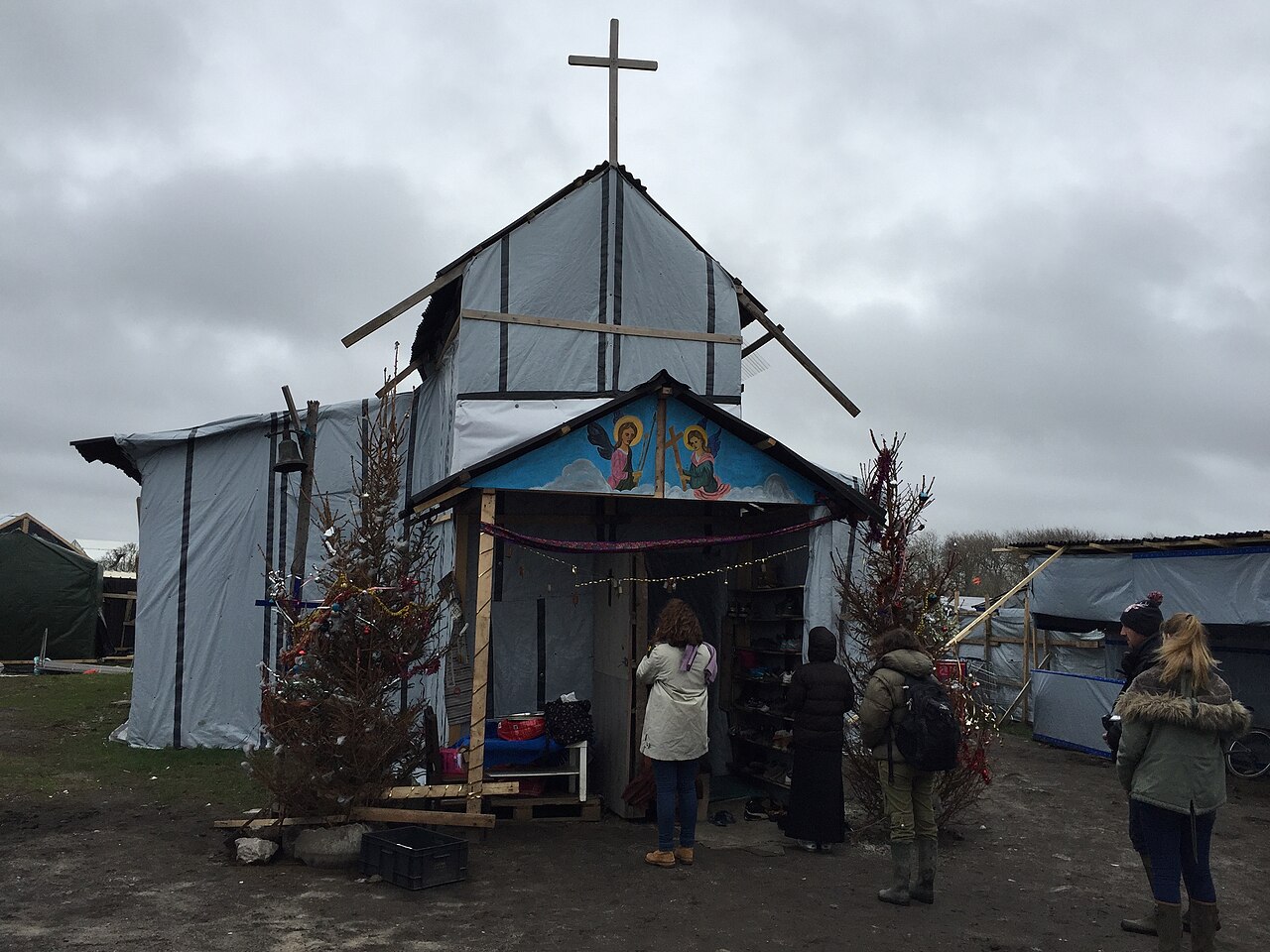
St Michaels' church in the Calais jungle before its demolition in 2016. Credits: Liam-stoopdice
UK Prime Minister Keir Starmer and French President Emmanuel Macron recently announced a one-in, one-out pilot programme, which the UK prime minister qualified as the “groundbreaking”. The scheme would see the British government relocate from France one asylum seeker with familial connections to the UK, for each person that is returned to France forcefully. But, the deal does nothing to reduce the perilousness of the journey across the Channel. Instead, as pointed out by a report from the UK-based group Humans for Rights Network, the “one in/one out” scheme is actually a trade between one person’s safety and another person’s life.
The report, titled “You can’t stay, but can’t go”, describes the dilemma that people on the move face in Calais and Dunkirk.
Thanks to UK funding, Calais has been turned over the years into a fortress. But beyond the physical obstacles, violence in Northern France against people on the move takes many forms. Police regularly use tear gas against families and children in forceful dispersal operations. Racial profiling is carried out in Calais and Dunkirk based on the suspicion that people living there will cross the Channel.
Meanwhile, French police continue to deploy violent tactics that endanger the lives of migrants. Dangerous at-sea maneuvers such as the use of pepper spray against small boat occupants and the slashing of their vessels with knives do nothing but increase the risks of loss of life in the Channel.
Ultimately, while every negotiated deal before it, the “one-in, one-out” scheme does not reduce the risks of the crossings because it provides no safe alternatives. Until the latter is acknowledged, the interventions from the UK and French governments on both sides of the Channel will continue to fail.
The Border Violence Monitoring Network accepts submissions for its blog. To contribute, please send your submission to press@borderviolence.eu
Thank you for your interest. We look forward to your contribution!