
'Check Against Delivery': What states said at the IMRF vs. what they do
by Kirsten Dimovitz, UN advocacy coordinator at BVMN. Published on 14 May 2026.
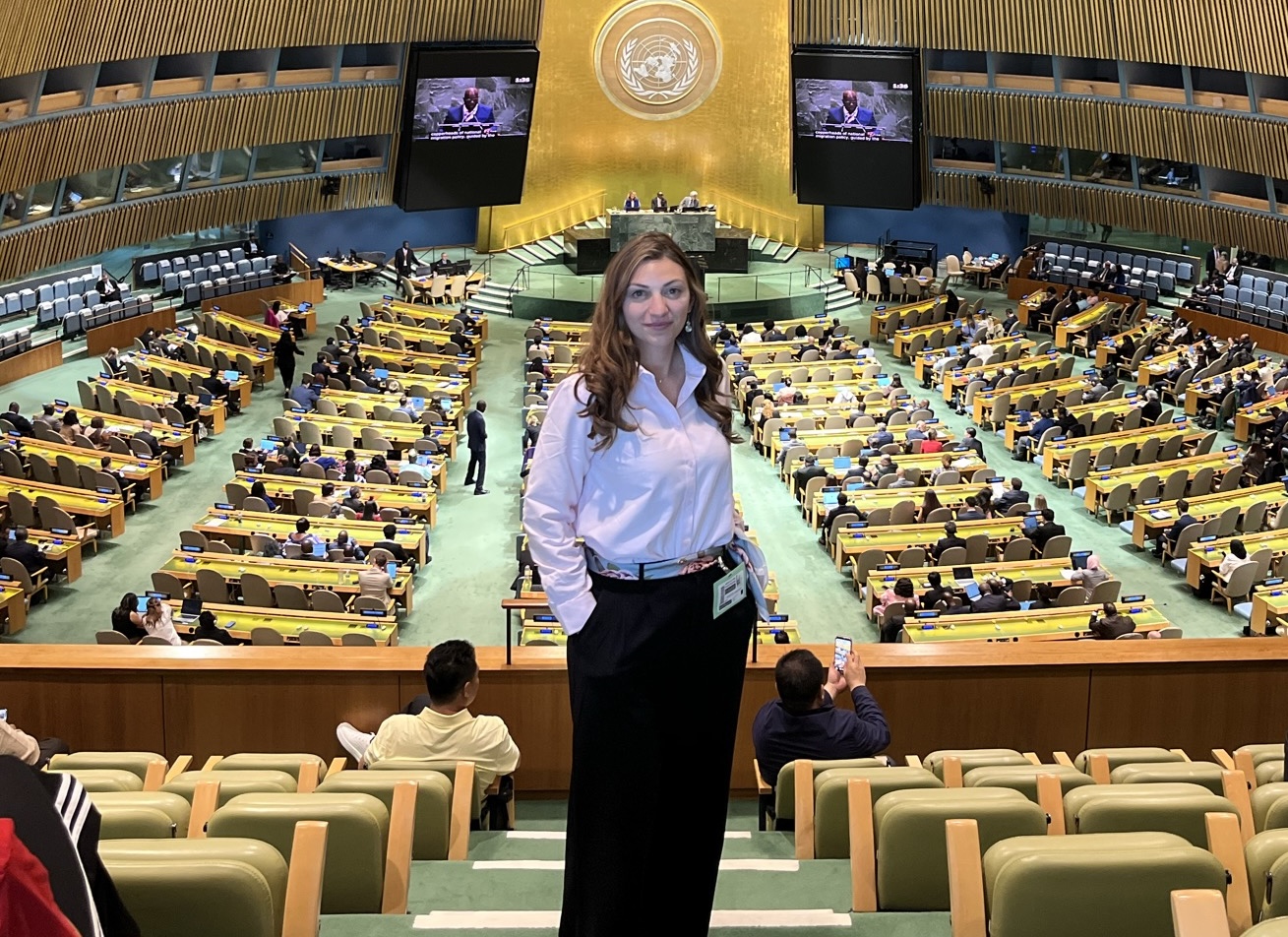
Header image: Kirsten at the second International Migration Review Forum (IMRF) at the United Nations Headquarters in New York last week.
Listening to national statements at a UN event is often an exercise in dissonance, a masterclass in the distance between diplomatic language in a fancy building and the documented reality on the ground. The second International Migration Review Forum, held in New York last week, was no different.
Every four years, states gather to review the Global Compact for Safe, Orderly and Regular Migration. They deliver carefully crafted statements, invoke human rights, human dignity, and international law. They commit to protections and proclaim their allegedly clean human rights records. And then they go home where the reality is very different.
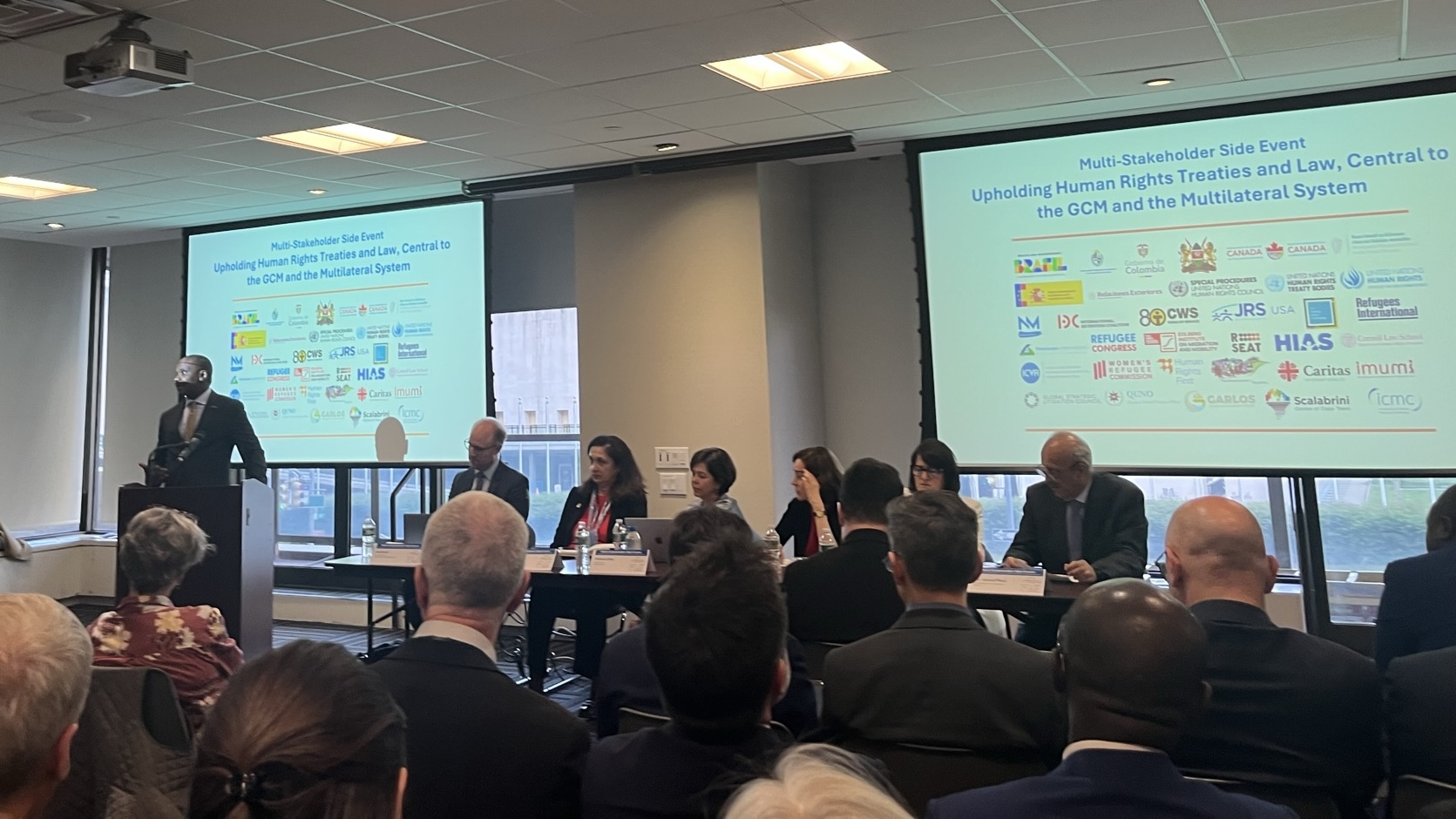 One of the many panels that Kirsten attended at the IMRF. Credits: Kirsten Dimovitz
The Gap Between Words and Practice
Let’s start with Croatia. At the IMRF, Croatian delegates assured the room that their authorities "ensure access to international protection and other legal remedies for all persons, fully respecting the right to seek asylum." They also said, “Croatia is fully committed to international human rights standards, including the principle of non-refoulement," and that Croatian border officers "undergo regular training on human rights compliance." This from a country whose systematic use of violent, racist, and inhumane pushbacks have been documented by the Border Violence Monitoring Network and its member organisations for more than eight years. And we are not alone, Human Rights Watch published a 94-page report in 2023, finding that violent pushbacks are "standard operating procedure" for Croatian border police, with officers routinely beating people, destroying phones, stealing money, and ignoring asylum requests, including from unaccompanied children. The AIDA and ECRE also recorded nearly 30,000 pushbacks from Croatia to Bosnia between 2020 and 2022 alone. Even Frontex's own Consultative Forum expressed concerns about its continued operations in Croatia "given the consistent reports of police violence and pushbacks by Croatian authorities as documented by media and various organisations."
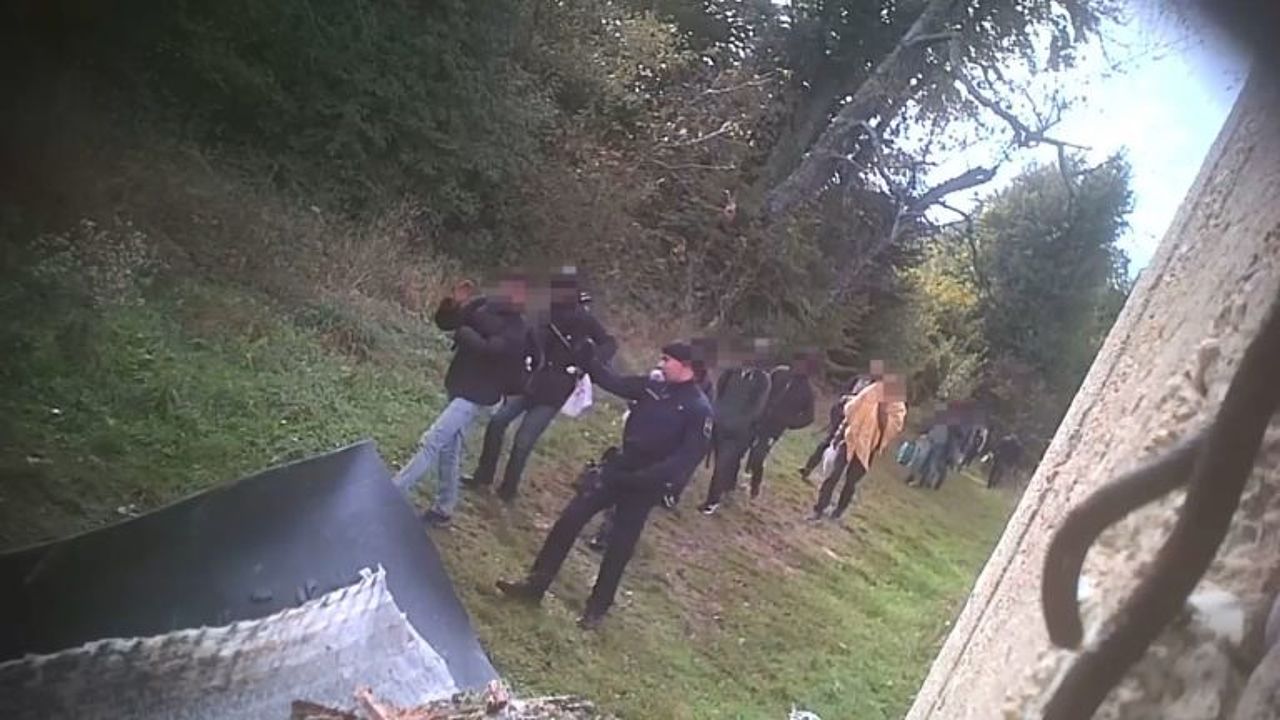 A pushback conducted by Croatian authorities captured by video in June 2021.
One testimony from October 2025 captures what Croatian "training on human rights compliance" looks like in practice. A group of five people, three adults and two unaccompanied minors from Palestine and Egypt were apprehended in Croatian territory, beaten, kicked, had their only phone confiscated and destroyed, before being pushed back into Bosnia without any asylum procedure. The title of the report is a quote from the respondent: "We need protection from Croatia, please protect us."
Then there's Greece. Greek representatives told the room that their border management policy is "firmly grounded in the protection of human life." Yet, pushbacks in the Aegean have been documented for years. People have been found adrift on life rafts after being abandoned at sea, bodies have washed up on shore, people have gone missing in the Evros river. Our database records 220 pushback testimonies from Greece, representing tens of thousands of people. A respondent documenting a March 2023 maritime pushback described beatings, forced undressing, body searches, and the deaths of two people. A woman was killed by suffocation and a man by drowning during a pushback from Greek territorial waters back to Turkiye.
Firmly grounded in the “protection of human life,” they claim.
North Macedonia then went on to describe an asylum system "founded on individualized, rights-based procedures.” Our database holds 69 documented pushback testimonies from North Macedonia, 15 involving minors, with beatings recorded in 64% of them. In a February 2021 testimony, Frontex officers coordinating with Macedonian police beat a group with batons so severely one man suffered broken bones and a dislocated shoulder. He could not wash his face for eight days and could not afford surgery. North Macedonia also told the room at the IMRF, it has invested in "continuous training for frontline officers on identifying and protecting vulnerable persons, including unaccompanied children” and only uses “detention as a last resort.” A December 2020 testimony tells a different story about what individualized, rights-based procedures look like in practice: a 17-year-old told officers he was a minor, but was taken to a police station, locked in a cell with no food or water, made to sign papers without a translator, and pushed back at night through a gate in the border fence while being kicked by officers in balaclavas. He then had to walk more than 70 kilometres back to Thessaloniki, drinking water from lakes along the way because he was so thirsty. The 17-year-old told them he was a minor. He was detained, kicked, and illegally expelled anyway.
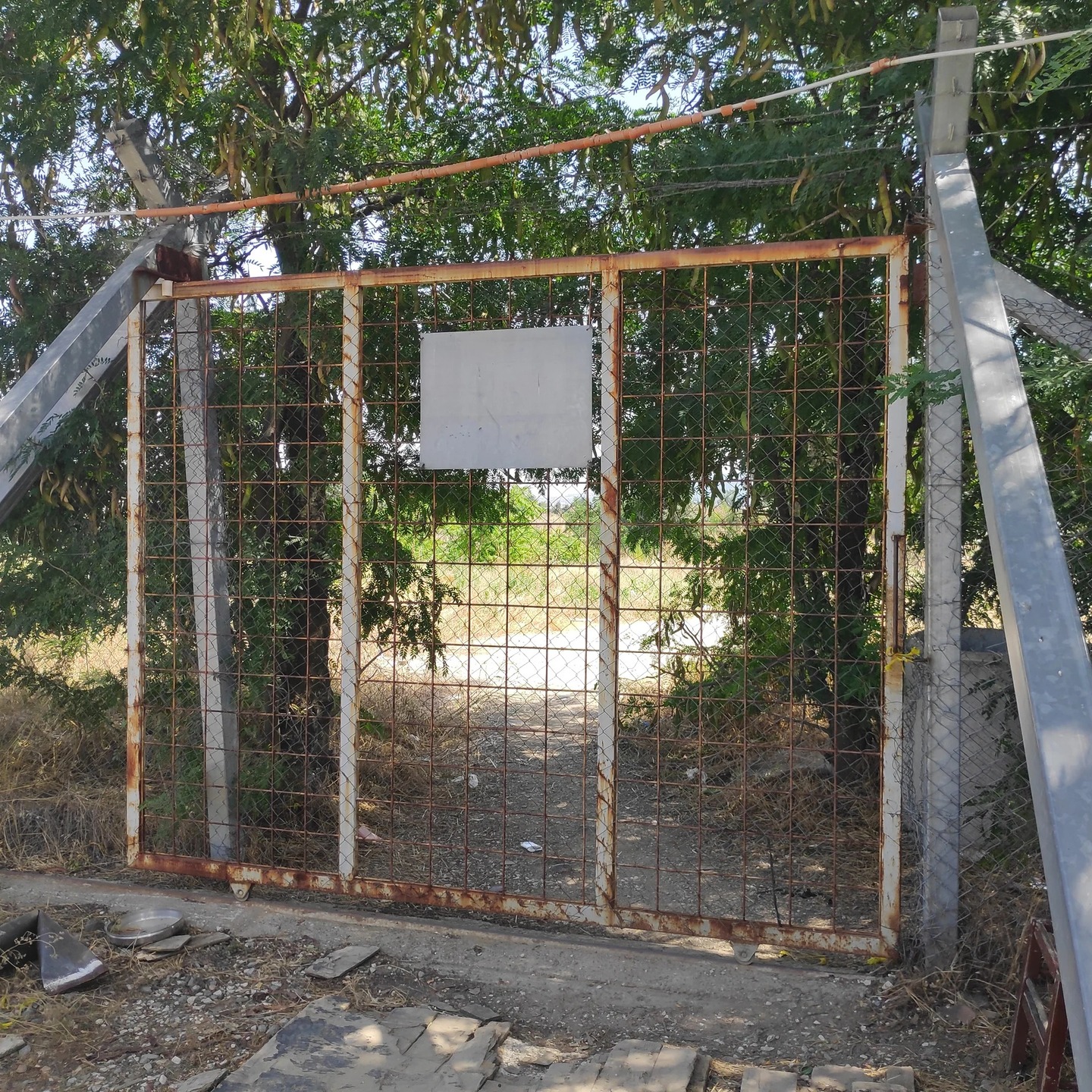 The gate used to push people on the move back from North Macedonia into Greece.
What Goes Unsaid
Then there are the statements that reveal more in what they don't say. Bosnia and Herzegovina announced a 40% decrease in irregular arrivals and presented it as a success story. But BiH remains, by its own admission, "primarily a transit country." If crossings are down, the question worth asking is not where the numbers went, but where the people did.
BVMN's December 2024 monthly report, compiled in part by Collective Aid from the ground in BiH, offers one explanation. The drop in recorded arrivals, it notes, is "likely to indicate that people on the move are trying harder to avoid being registered or are avoiding the Temporary Reception Centres.” Numbers have not decreased because people have stopped coming or because conditions improved. But rather, they have decreased because attempting to register as an arrival and access asylum leads to detention, deportation, violence, and illegal expulsion, and people have learned this.
Alongside this “decrease”, Croatian authorities continue carrying out violent illegal pushbacks at the Croatian-Bosnian border, a practice BVMN has documented continuously for years. A December 2024 testimony from the investigation entitled Clothes in the River, Backpacks on Fire, documents how Croatian officers burn the belongings and clothes of a group in front of them before an illegal expulsion.
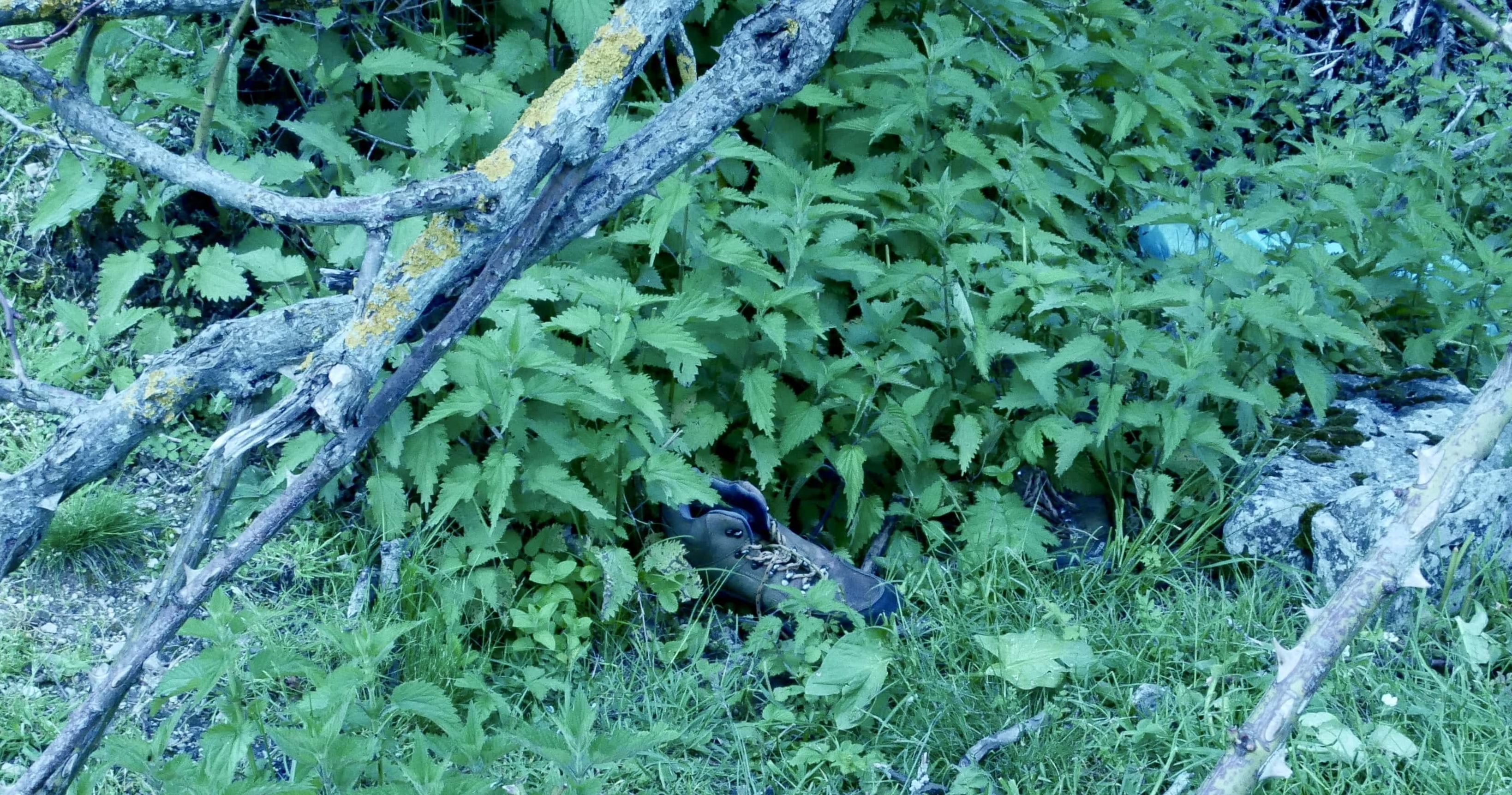 Picture of personal items found near the Croatian-Bosnian border. Photo taken in May 2025. Credit: Tristan Solf
The BiH statement also highlights its "expanded cooperation with Frontex" as a marker of progress. However, as BVMN documents in its historical analysis of EU border externalisation, Western involvement in the Balkans is not aimed at creating safe pathways, its goal is to externalise EU border management. Western countries encourage Western Balkan countries to “do the dirty work of pushbacks, readmissions and deportation for the EU." And Bosnia's lower numbers are a reflection of that dirty work being done.
Bosnia also highlighted that it "balances between security aspects, protection of human rights and complying with international obligations." A report from member organisation Collective Aid on the Lukavica Detention Center describes what that actually looks like in practice. Lukavica is Bosnia's only immigration detention facility, EU-funded, and every monitoring body that has managed to get inside including the UN Special Rapporteur, the European Committee for the Prevention of Torture (three times), Human Rights Watch, and Bosnia's own Ombudsman has returned with the same findings: no meaningful legal aid, inhumane conditions, children detained without additional protections. Between 2018 and 2024, 115 children passed through the facility. Human rights were never part of that balance.
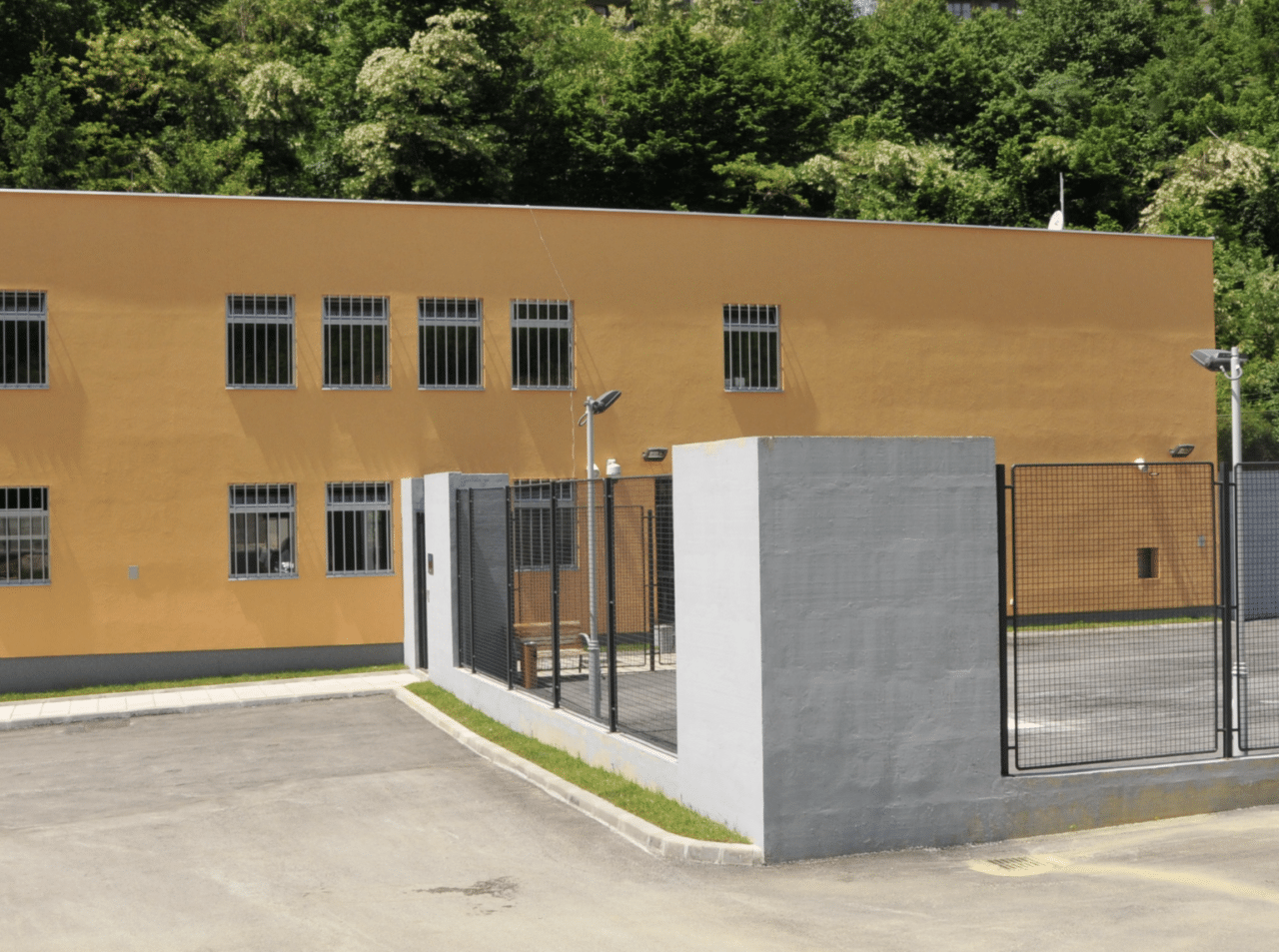
Bosnia's Lukavica Detention Centre. Credits: the Bosnian Service for Foreigners’ Affairs
Cyprus spoke at length about burden-sharing and the pressures of being a destination country, yet what went unmentioned was the documented illegal pushbacks and people trapped in the Cyprus Buffer Zone.
The Dissenters
Italy, Czech Republic, Poland and Slovakia disassociated themselves from the Progress Declaration, complaining it failed to reflect the "innovative solutions" that have emerged since 2019 to manage irregular migration. The innovative solutions they are referring to mean Return Hubs. Offshore processing, deterrence architecture, and pushbacks. Their policy on migration, they told the room, is "in line with international law and respect of human rights.”
Italy delivered this statement while the central Mediterranean remains, in the words of BVMN's January 2026 report, a “mass grave” with over 1,000 people estimated to have died at sea in January 2026 alone as Cyclone Harry raged across the region, "followed by a thundering silence from government and society." It delivered this statement while its government continues to systematically obstruct the civilian search and rescue vessels trying to prevent those deaths, detaining NGO ships, assigning distant ports, and passing the "Flussi decree" in December 2024, which extends fines to the permanent confiscation of rescue vessels. It delivered this statement while Italian-donated patrol vessels are used by the EU-funded Libyan Coast Guard to intercept people in international waters and forcibly return them to Libya, where MSF has documented torture, extortion, and detention in conditions that amount to crimes against humanity. And it delivered this statement while six Italian officers stand trial in the Cutro case, accused of causing a shipwreck that killed 94 people in 2023.
Our policy on migration is "in line with international law and respect of human rights."
Poland, meanwhile, assured delegates that it "fully recognizes that all migrants, regardless of their status, are human rights holders" and supports "non-custodial alternatives to detention, especially for children.” BVMN member organisation We Are Monitoring recorded 13,600 pushbacks from Poland to Belarus between January and November 2024 alone. And these are just incidents, the number of individuals is much higher. Their data also documents the death toll. Over 100 people have died at Poland's eastern border since 2021, bodies found in forests and rivers, including those of children, after people on the move asked authorities to search for injured or sick people. Authorities ignored their pleas for help and illegally pushed them back.
BVMN's monthly reports consistently document the pattern: beatings, pepper spray, dog attacks, phones destroyed, people forced to sign documents in languages they don't understand waiving their right to asylum. In February 2025, the government went further, suspending the right to asylum at the Belarus border entirely.
All migrants are “human rights holders.” Just not at the border, and not if they aren’t from Europe apparently.
The Forum Itself
The IMRF, while often a lot of words and promises, is still important. Bosnia committed to a voluntary review process of its GCM implementation, which we and others will be watching. Tunisia positioned itself carefully inside EU externalization negotiations, asking for financial support while also making it clear that it rejects being made a platform for transit or forced returns, and that it completely rejects the EU’s use of illegal collective expulsions. The Netherlands, Portugal, and Denmark pledged money. Spain discussed how regularisation policies can manage migration while ensuring human rights are respected. Even those states whose rhetoric does not match reality felt some need to cover their practices on the international stage. That is worth noting.

'Team Europe' announcing an externalisation deal with Tunisia in July 2023. Credits: European Commission
But the distance between what was said at this forum and what is happening at the borders today is not a gap in implementation. It is a choice. States choose to fund the Libyan Coast Guard and ground rescue ships. They choose to beat people, push people back into forests and rivers, and burn all of their belongings. They choose to detain children and call it a legal framework. They choose to sign compacts and declarations that commit to one thing, and then go home and do the opposite.
But choices can be changed. And the pressure to change them does not stop just because this forum has closed.
The EU Deportation or “Return” Regulation is still being negotiated. The externalisation deals with Tunisia, with Bosnia, with Uzbekistan and whoever comes next are still being written. The Frontex Status Agreements are still being signed. These are live processes, and they are not inevitable. Every piece of documented evidence, every testimony, every FOI request, every report that names what is happening and who is responsible, is a form of pressure. It is how the distance between words and practice gets made visible, and visibility is where accountability begins.
This piece is part of that record. Croatia knows what its border police are doing. Greece knows what happens in the Aegean. Poland knows what is happening in its forests. They said otherwise at the IMRF, in a room full of witnesses, and those statements are now documented alongside the evidence that contradicts them. The distance between words and practice has been named, sourced, and filed, and the pressure to close it does not stop because a Forum has ended.
The Border Violence Monitoring Network accepts submissions for its blog. To contribute, please send your submission to press@borderviolence.eu
Thank you for your interest. We look forward to your contribution!